Quick upload monitors
Your components are installed and enabled. This page adds your first monitors, three ways: one by hand, many at once from a CSV file, and a user journey in a real browser.
One monitor by hand
Start here: it shows the whole life of a monitor in two minutes.
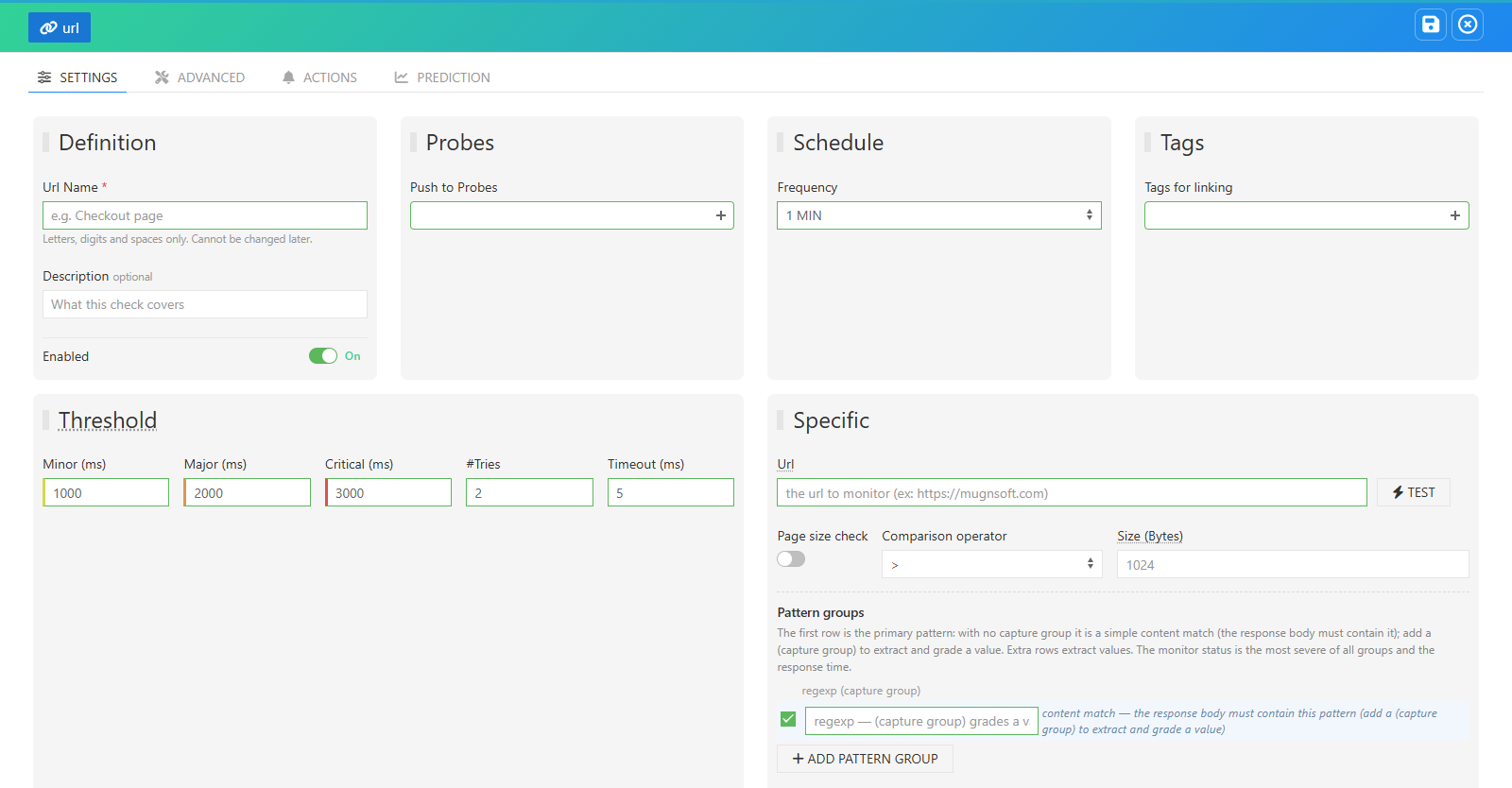
- Open all monitoring (the globe icon), click + next to the search box and choose url.
- Enter a Url Name, pick the probe in Push to Probes, set the Frequency, and type the address in Url.
- Click TEST. The probe runs the check once and shows the result step by step, before anything is saved. See Testing a monitor.
- Click the disk icon to save. The monitor appears in the list and starts on its schedule.
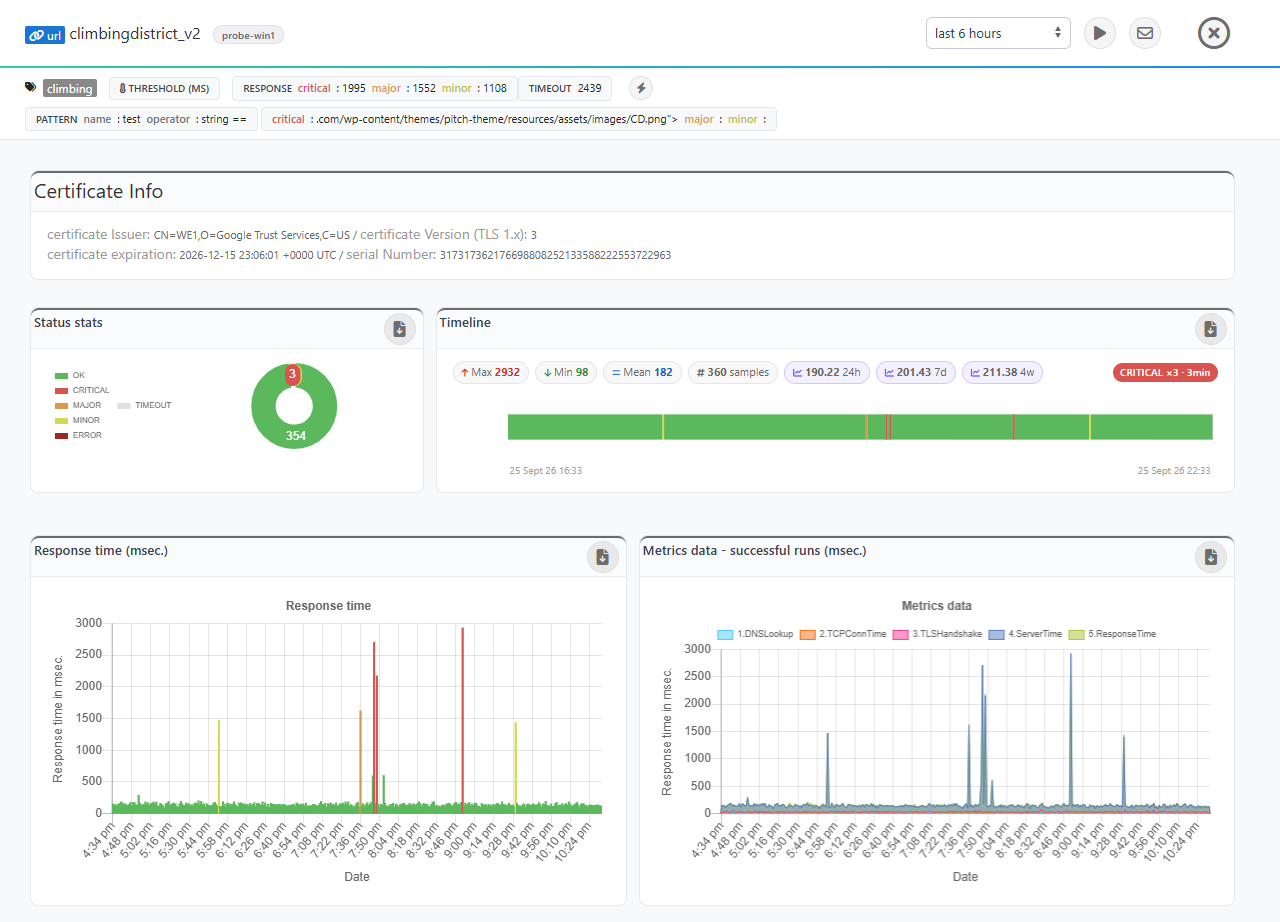
- After a few runs, click the monitor’s pie chart to open its report: certificate, status timeline, response time and its breakdown (DNS, TCP connect, TLS, server time).
The other types work the same way. Monitor types tells you which one to choose.
Many monitors from a CSV file
Use this to load a list of URLs, APIs, TCP ports or pings in one go. The demo materials contain example CSV files.
- Open gear menu → import/export. The IMPORT tab is selected.
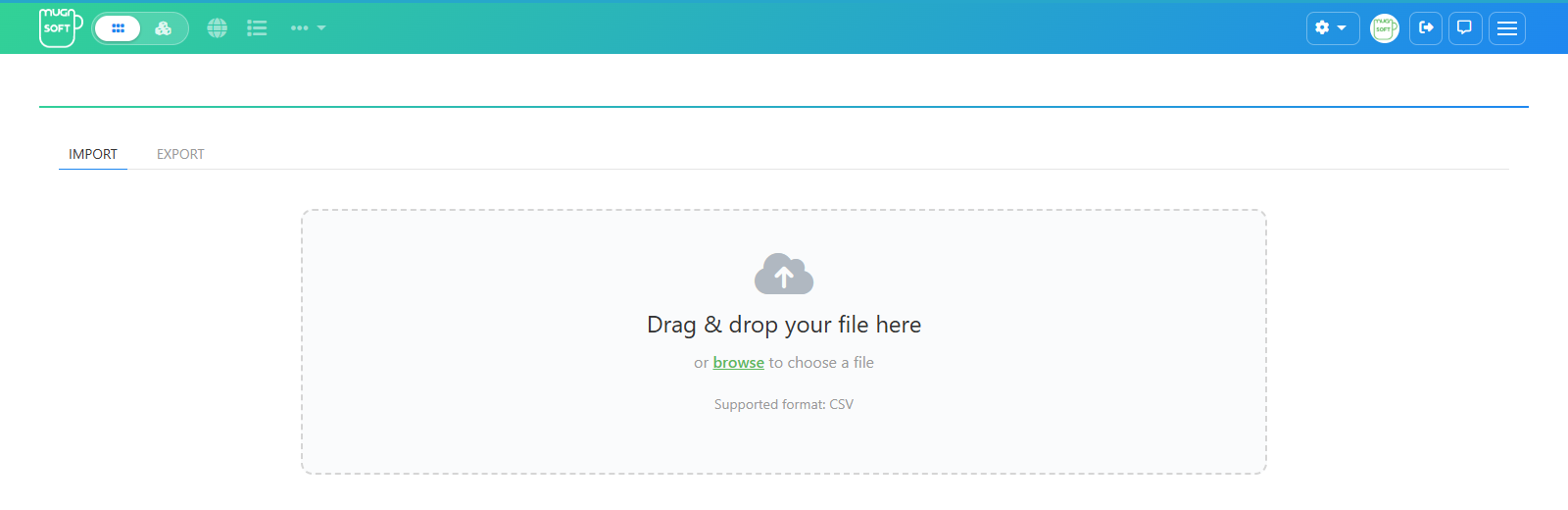
- Drag a CSV file onto the drop zone, or click browse. A notification gives the result of each file.
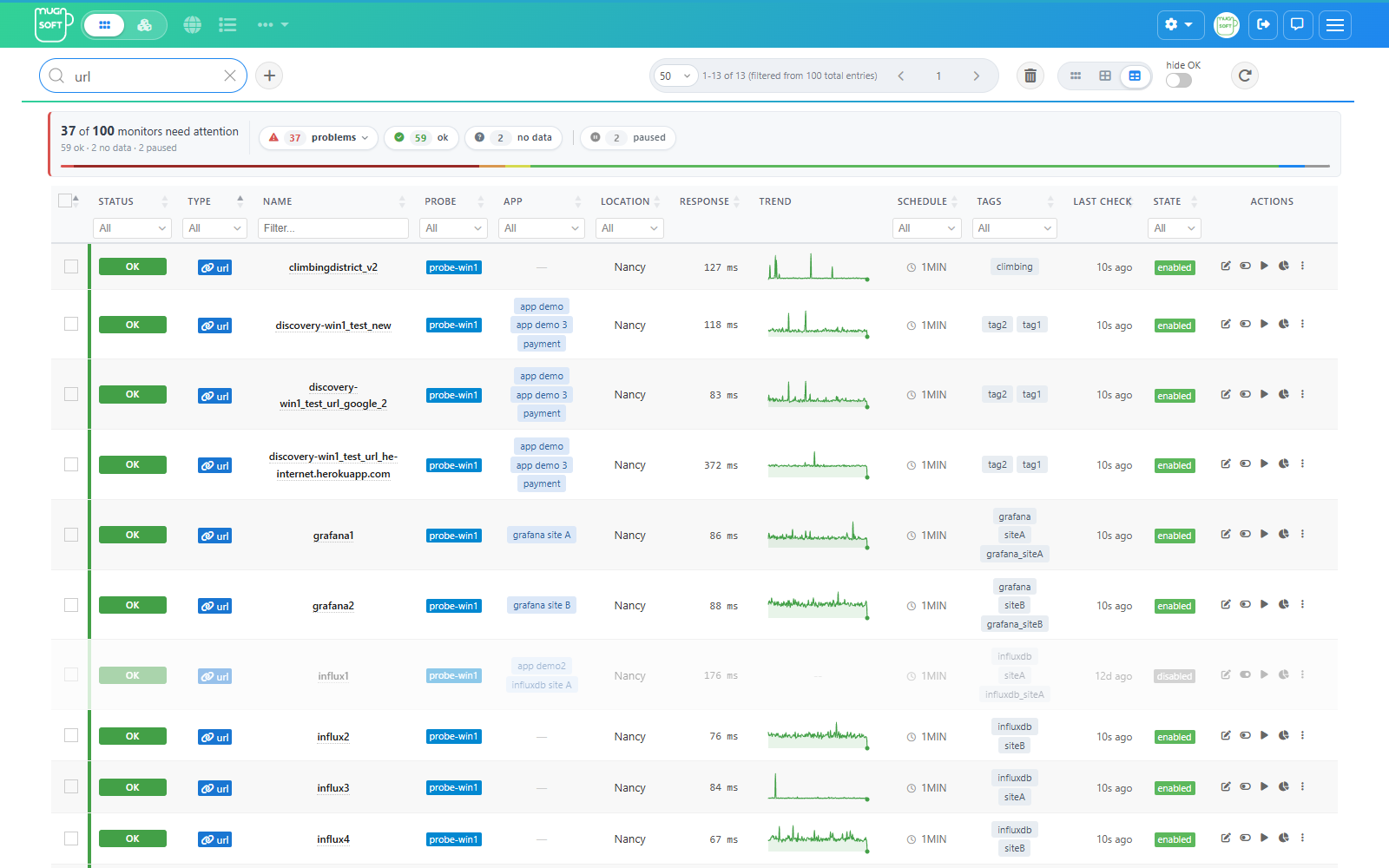
- Open all monitoring: the imported monitors are listed and start reporting on their schedule.
Tip
To get the exact columns of a type, create one monitor by hand and export it from the EXPORT tab. Edit the file and import it back. See Import, export and repository snapshot.
A user journey in a browser (EUM)
An EUM monitor replays a real journey, such as logging in and placing an order, in Chrome, Firefox or Edge. You record the journey in the Mugnsoft IDE, test it there, and deploy it to a probe from the IDE.
Two things to know before you start:
- The probe needs a browser and its matching driver. It finds the installed browsers and downloads the drivers by itself. On a host without Internet access, see browsers for EUM journeys.
- A journey can pass a two-factor login (TOTP) and read its passwords from a vault. See EUM Monitor.
Next
- Group monitors into a business service: App definition and data modelling.
- Set when a monitor turns MINOR, MAJOR or CRITICAL: Thresholds.
- Send alerts and data to your tools.